The Indus cities: how can we tell how old they are?
Without lists of kings, archaeologists date Indus cities through changing objects and radiocarbon samples. What can each kind of evidence tell us?
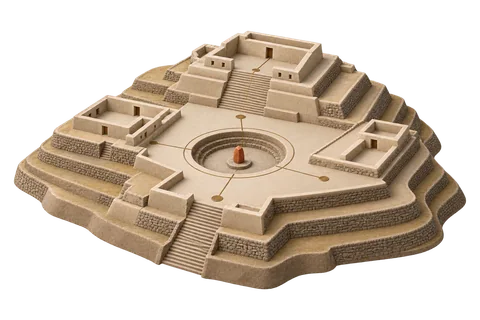
The age of the great Indus cities
Coningham and Young's chapter 'An Era of Integration' frames the Mature Harappan or Indus civilization at about 2600 to 1900 BCE, a period of planned cities, shared weights and seals, and long-distance exchange across the Indus and Ghaggar-Hakra systems. Cambridge University Press ↗
Dates from the ground up
The Harappa Archaeological Research Project publishes a chronological sequence built from artifact categories and radiocarbon dates at the site of Harappa. Without a king list or dated inscriptions, this kind of stratigraphic and radiocarbon sequence is what holds the period together. Harappa Archaeological Research Project / Harappa.com ↗
One site or an entire civilization?
Distinguish a chapter-level synthesis from a site-level sequence. The first tells you how the period is framed; the second tells you how one place was dated. A strong claim about the whole civilization needs both.
Would new dates change the whole region?
What would you expect to change in the dates if a new radiocarbon series came from a different city? Think about which claims are site-specific and which are regional.