Kerma: a kingdom of its own beside Egypt
Kerma grew into a powerful Kushite centre south of Egypt. Which finds support the case for an independent state?
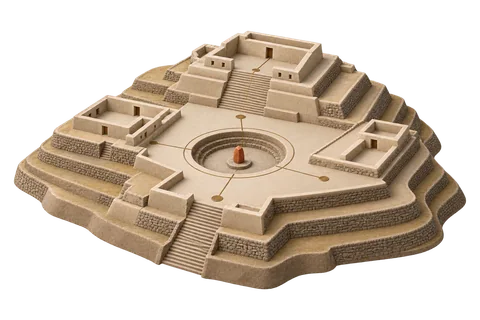
What remains of Kerma
UNESCO's tentative-list description of Kerma and Dokki Gel presents a major Middle Nile state with an urban center, monumental mudbrick architecture, royal tumuli, and long-distance exchange. The research timeline used here places Kerma's formation and florescence at about 2450 to 1500 BCE. UNESCO World Heritage Centre ↗
Power seen from a neighbor
The Jebel Barkal Archaeological Project's historical summary records Kerma-culture occupation near Jebel Barkal by roughly 1700 BCE, and the UNESCO synthesis describes Kush as the most powerful state in the Nile Valley from around that time. Egypt's New Kingdom conquest after about 1500 BCE overlays, but does not erase, the earlier traditions. University of Michigan / NCAM Sudan ↗
An Egyptian account or local evidence?
The British Museum's gallery introduction to Sudan, Egypt, and Nubia is a useful orientation to regional chronology. As you read, keep the Egyptian narrative and the local evidence separate: a conquest text and an excavated city tell different stories about the same place. British Museum ↗
What evidence makes a state?
Which of the listed evidence types, an urban center, monumental architecture, royal burials, or exchange, would you want first before calling a society a state? Why that one?