Chavín: a ceremonial centre before the Andean states
Chavín de Huántar gave its name to a style found across the Andes. The site’s building phases and the style’s spread have different dates.
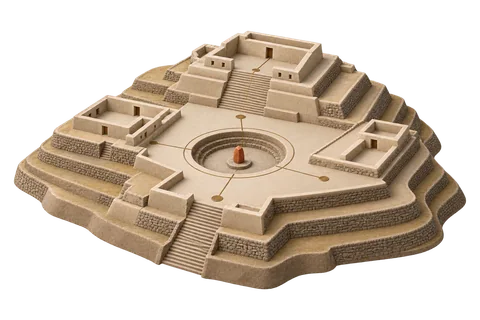
The site at Chavín de Huántar
UNESCO describes Chavín as a ceremonial and pilgrimage centre whose name was given to a culture developing between about 1500 and 300 BCE. Its buildings and plazas carry carved stone iconography, including the Lanzón and the Raimondi Stela. UNESCO World Heritage Centre ↗
A horizon and a building are different dates
The research record warns that monument construction dates and the cultural-horizon date require decomposition. 'Chavín' names a style found widely across the Andes and a specific site with its own building sequence. The two should not share one date by default.
How did the Chavín style spread?
When a site gives its name to a culture, ask in which direction the influence ran and how that was established: shared iconography, traded objects, or something else.
Was Chavín a precursor, or simply earlier?
The record keeps an open question about which monumental traditions demonstrably predate later named polities. What evidence would you require to call Chavín a predecessor of a later state rather than simply earlier?