Tiwanaku: when did the city thrive, and when was it built?
Tiwanaku became a centre on the high Andean plateau. Its peak of influence is not automatically the date of every building.
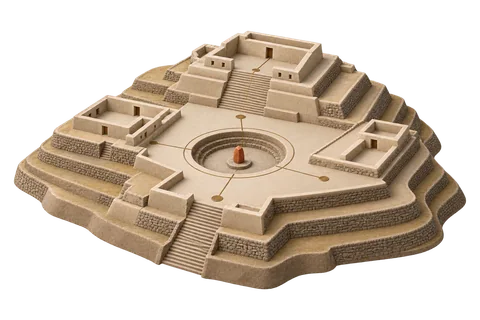
What the Tiwanaku record describes
UNESCO inscribed Tiwanaku in 2000 as the spiritual and political centre of a culture whose influence spread widely across the Andes; the nomination describes it as a capital until about the eighth century CE, with political dominance declining from the eleventh century. UNESCO World Heritage Centre ↗
A florescence, not every monument
The research record frames an urban florescence at about 400 to 900 CE and warns against using that range as the date of every monument at the site. Building sequences at a long-lived centre need their own evidence.
What survives, and what was restored?
Conservation reports in the record mention concern for the stability of the Akapana platform and the condition of the Gate of the Sun. A monument's current state and its original form are separate facts; reconstructions in between add a third. UNESCO World Heritage Centre ↗
Same style, same political power?
What would show that a widely shared style across the Andes meant political control rather than admiration and exchange?