From Naqada to the first dynasties
Over a thousand years, Upper Egyptian communities became the kingdom of the first dynasties. Objects and radiocarbon dates reveal different parts of the change.
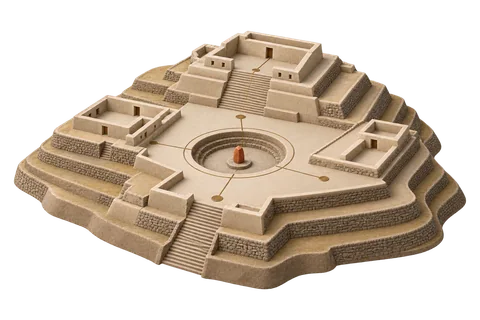
How Upper Egyptian communities changed
UCL's Digital Egypt chronology lays out the Naqada period of Upper Egypt in phases, Naqada I to III, across roughly 4000 to 3000 BCE. The sequence was built from pottery and grave assemblages, so it is relative first and absolute second. UCL Digital Egypt for Universities ↗
The dynasties begin
The same resource frames the Early Dynastic period at about 3100 to 2686 BCE, when the first kings ruled a unified Nile Valley. The research record treats this as an established historical period while noting that king sequences and higher-proximity archaeological evidence should be linked before independent release. UCL Digital Egypt for Universities ↗
New dates for old tombs
A 2016 study in Radiocarbon reports new radiocarbon dating of the archaic royal necropolis of Umm el-Qaab at Abydos. Papers like this test the relative sequence against measured dates. The current record uses the abstract-level access and flags that sample-level extraction is still required. Radiocarbon / Cambridge University Press ↗
What if pottery and radiocarbon disagree?
If the pottery sequence and the radiocarbon dates disagree for one tomb, which would you revise first, and what would you need to see before deciding?