Uruk: how one of the first cities grew
Large buildings, administration, and early writing reveal Uruk’s growth. But a long historical period rarely has an exact start date.
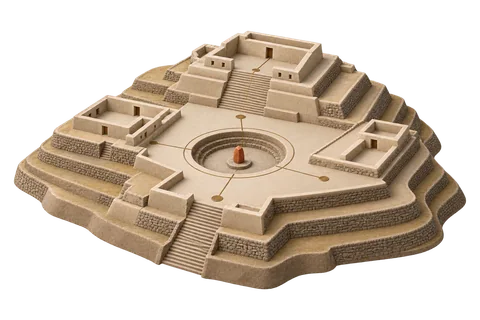
How Uruk grew
Susan Pollock's Ancient Mesopotamia, in Cambridge's Case Studies in Early Societies series, surveys the early state and urban societies of lowland Mesopotamia from about 5000 to 2100 BCE. The research record cites the publisher's sample pages for a chronological chart and flags that its dates are approximate. The record's own range for the Uruk period is about 4000 to 3100 BCE. Cambridge University Press ↗
Growth has its own timing
The Cambridge chapter on the birth of the state discusses Uruk's growth from about 3600 BCE and the transition at the end of the fourth millennium. A period label and a growth curve are different things: one is a convenient box, the other is a process with its own evidence. Cambridge University Press ↗
What makes Uruk a city?
List what makes Uruk count as a city for the author you are reading: size, monumental buildings, administrative tools, writing. Then ask which of those criteria are visible in excavated material and which are inferred.
When did Uruk become a city?
If the period range says 4000 BCE but the growth evidence clusters later, which number belongs on a timeline, and how would you label it?