Jericho: eleven thousand years in one mound
Jericho preserves traces of thousands of years beside a spring. The oldest date for the mound cannot simply be assigned to its later walls.
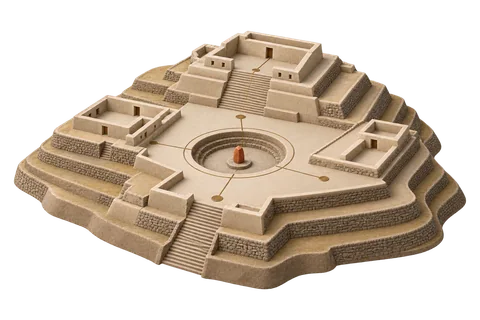
What the Jericho mound preserves
UNESCO inscribed Ancient Jericho/Tell es-Sultan in 2023: an oval mound beside the spring of Ain es-Sultan whose deposits begin around 10,500 BCE and whose stratigraphy preserves twenty-nine phases of occupation. UNESCO ↗
Two stories in one place
The record points to two contexts. Monumental architecture and shared structures of the ninth to eighth millennium BCE illustrate the shift to permanent settlement in the Fertile Crescent; Middle Bronze Age remains show a large Canaanite city-state with innovative rampart fortifications. The same mound tells both stories, thousands of years apart. UNESCO ↗
Which wall of Jericho?
A famous site attracts claims that borrow its oldest date for its youngest walls. Keep each feature with its phase. Ask which structure a date actually belongs to before letting 'the walls of Jericho' mean one thing.
What can future digs still reveal?
The evaluation also noted modern encroachment around the mound. How does the condition of a site's surroundings affect what future excavation can still learn?