The Blog
A library of stories and sources
From early cities and scripts to beliefs, science, and contested history. Pick a subject, read a guide, and open the material behind it.
Every guide links its sources. We mark what comes from a surviving object, what belongs to a tradition, and what remains a hypothesis.
4 of 96 source guides
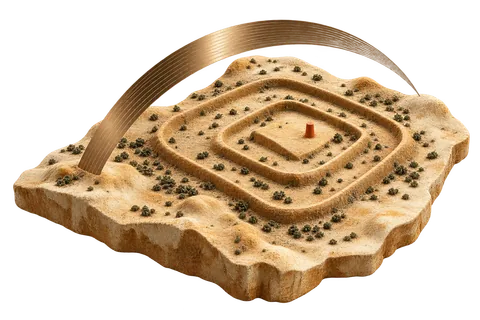
Amazon earthworks: 432 observed, thousands estimated
A laser survey found 432 earthworks. The thousands more in the headline are a model estimate, not newly observed sites.
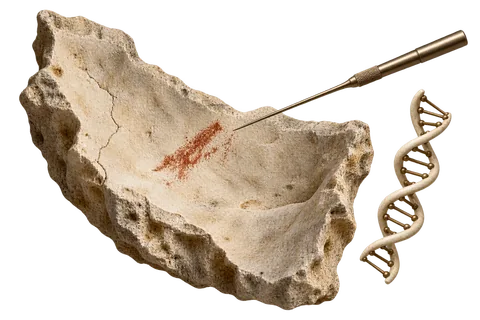
Ancient DNA on a cave wall is not an artist's signature
Ancient human DNA survived on cave walls near paintings. Did it come from an artist or a later visitor? The evidence cannot tell us yet.
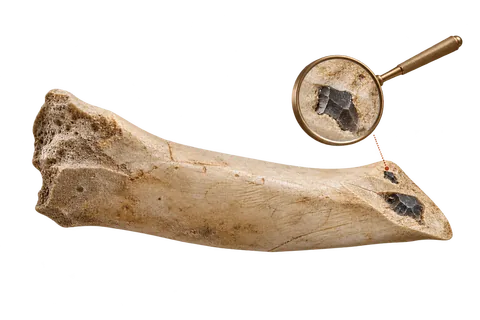
A 480,000-year-old tool and the evidence in its surface
A 480,000-year-old elephant bone carries marks of work. They help show how the tool was used, but cannot identify its maker.
Plague before farming cities: the Lake Baikal evidence
Ancient plague DNA was found near Lake Baikal among hunter-gatherer burials. Genomes point to two outbreaks, but not the number of deaths.
Did gut microbes travel with us? A genomic model of deep migration
Gut microbes may carry traces of ancient human movement. Researchers reconstructed a possible route with a model; nobody observed that journey directly.
The Rosetta Stone: one decree, three scripts
One decree was written in three scripts. How did comparison help people read Egyptian writing, and why was the stone not a ready-made dictionary?
We can sound out Meroitic. Why is the language still hard to understand?
Scholars can assign sounds to Meroitic signs, but many sentences still resist translation. Reading letters and understanding a language are different tasks.
The Indus script is unread. Can we still learn what it was for?
The short inscriptions of the Indus civilization remain undeciphered. A study proposes how they were used, but that is not a translation.
The Rig Veda: how old is a text first passed on by voice?
The hymns passed through an oral tradition before the surviving manuscripts were made. Composition, transmission, and copying have different dates.
Proto-Indo-European: how to reconstruct a language with no texts
No written record survives from the shared ancestor of Sanskrit, Latin, and English. Comparing languages can recover some features, but not its speakers’ exact words.
When did Russian begin? There is no single birthday
The language changed over centuries, from shared Slavic ancestors to modern Russian. No one date marks its birth.
How far back can language comparison reach?
Proposed ancestors of very old language families reach beyond surviving texts. Where can comparison still test a claim, and where does it become a hypothesis?
English and German: the ancestor they share
They sound different today, but share a West Germanic ancestor. Their relationship lies in how words changed, not in a single date when either language began.
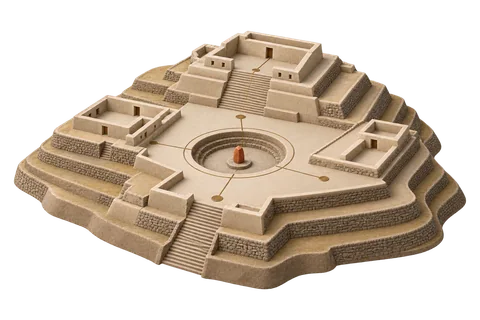
Serra da Capivara: rock art and the oldest-dates debate
Hundreds of rock-art sites survive at Brazil’s Serra da Capivara. The earliest proposed dates for people in the area remain disputed.
Chinchorro: mummies thousands of years before Egypt’s
People on the Atacama coast preserved the dead long before ancient Egyptians did. The practice lasted for centuries; it was not one event.
Caral: a wider map of early urban life
Caral shows that early urban life was not confined to one region. A shared timeline lets us compare societies without inventing contact between them.
Göbekli Tepe: monuments raised before farming towns
At Göbekli Tepe, people raised carved stone enclosures before farming towns appeared. How do archaeologists date a place that changed over time?
Ubaid: the villages before the first cities
Ubaid settlements came before Mesopotamia’s large cities. Two published timelines for the period differ, and averaging them would hide the disagreement.
Uruk: how one of the first cities grew
Large buildings, administration, and early writing reveal Uruk’s growth. But a long historical period rarely has an exact start date.
The Indus cities: how can we tell how old they are?
Without lists of kings, archaeologists date Indus cities through changing objects and radiocarbon samples. What can each kind of evidence tell us?
Mehrgarh: why new dates change a cemetery’s history
Tooth-enamel measurements published in 2025 suggest a later date for Mehrgarh’s cemetery. They do not automatically redate every layer of the settlement.
Gonur Depe and the Oxus civilization: a Bronze Age world with two clocks
The largest site of the Oxus civilization has two published timelines. Compare their evidence before assigning a single date to the whole culture.
Kerma: a kingdom of its own beside Egypt
Kerma grew into a powerful Kushite centre south of Egypt. Which finds support the case for an independent state?
Çatalhöyük: a town without streets
At Çatalhöyük, houses stood so close that residents entered through roofs. Two mounds and many layers show how the settlement changed.
Jericho: eleven thousand years in one mound
Jericho preserves traces of thousands of years beside a spring. The oldest date for the mound cannot simply be assigned to its later walls.
From Naqada to the first dynasties
Over a thousand years, Upper Egyptian communities became the kingdom of the first dynasties. Objects and radiocarbon dates reveal different parts of the change.
Sumer: how scholars divide its early history
The Square Temple at Tell Asmar helped define the Early Dynastic period. The boundaries of its stages remain debated.
The pyramids of Sudan: counting what survives
More pyramidal structures survive in Sudan than in Egypt. The total depends on what you count and how many have already disappeared.
Napata: the kingdom that ruled Egypt from the south
Kushite rulers governed Egypt as the Twenty-fifth Dynasty. Follow the story from Gebel Barkal to pharaonic power without blending the dates of each stage.
Baalbek: what is older, the temple or the remains below it?
Earlier remains lie beneath the Roman temple. Their age does not make every part of the great structure above them equally old.
Star forts: what the construction records say
Fortresses in different countries share a star-like shape. Five documented building histories let us check who built each one and when.
Chavín: a ceremonial centre before the Andean states
Chavín de Huántar gave its name to a style found across the Andes. The site’s building phases and the style’s spread have different dates.
The Nasca lines: a date cannot explain their purpose
The vast drawings at Nasca and Palpa were made over centuries. A date places each one in history, but does not explain by itself why it was made.
Tiwanaku: when did the city thrive, and when was it built?
Tiwanaku became a centre on the high Andean plateau. Its peak of influence is not automatically the date of every building.
St Petersburg before 1703: what stood on the site?
Peter I’s city plan, an earlier Swedish fortress, and the stages of the Peter and Paul Fortress appear in different records. Together they give a checkable history of the place.
Plimpton 322: a Babylonian table and its interpreters
Plimpton 322 is a clay tablet filled with columns of numbers. We can read them, but scholars still debate why the table was made.
The Rhind Papyrus: a scribe's handbook of problems
The Rhind Papyrus contains 84 mathematical problems. The date of the surviving roll may differ from the age of the problems it records.
Writings on Reckoning: a tomb manuscript and a known classic
The bamboo manuscript Suan shu shu was found in a Han tomb. It helps us test the history of the Nine Chapters, known through later copies.
K.2069: a reciprocal table from the library at Nineveh
Tablet K.2069 shows how reciprocal numbers were written in Nineveh’s base-60 system. The tablet’s age is not the date when the method was invented.
Archimedes: what survives of his works
Archimedes’ works reached us in copies made many centuries later. Understanding them means keeping the author, the work, and the manuscript apart.
YBC 7289: the square root of two on a school tablet
A small Babylonian tablet shows a square and an approximation of the square root of two. Try reading its number the way the scribe wrote it.
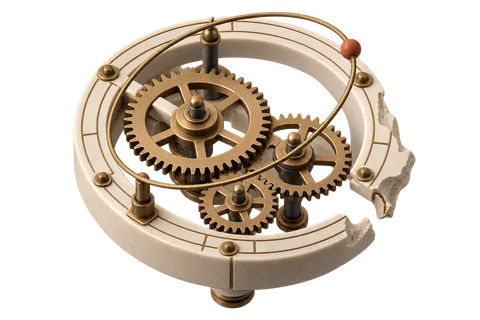
MUL.APIN: a Babylonian compendium of the sky
The MUL.APIN tablet preserves Babylonian knowledge of the sky. The surviving copy’s date does not tell us when that tradition began.
Astronomical Diaries: a dated record of the Babylonian sky
Babylonian scribes left dated observations of the sky. Tablet BM 32312 helps separate a recorded event from a later explanation of it.
Copernicus and Ibn al-Shatir: how close are their Mercury models?
Two models of Mercury’s movement look strikingly alike. Which matches suggest knowledge was passed on, and which leave its route unproven?
The Āryabhaṭīya: dating a work and its witnesses
The Āryabhaṭīya is usually dated to 499 CE, but surviving copies are later. A scholarly edition helps keep the work’s date apart from the manuscripts’ dates.
Papyrus Ebers: a medical scroll from the end of the 16th century BCE
Papyrus Ebers brings remedies, spoken formulas, and ideas about the body together. The scroll and its edition show how these kinds of knowledge sat side by side in ancient Egypt.
Hippocrates and Dioscorides: ancient medicine in later manuscripts
Greek medical works survive through Byzantine manuscripts. A copy’s date tells us when it was made, not when the text first appeared.
Papyrus Berlin 3027: spells and remedies for mother and child
An Eighteenth Dynasty papyrus places remedies and spells for mothers and children together. Does our modern line between treatment and ritual fit this text?
Antikythera: how much can a fragment reveal?
Only fragments of the Antikythera mechanism survive. What can we see on them, and what has been added in a scholarly reconstruction?
Two thirteenth-century astrolabes: what does an inscription prove?
Compare instruments in London and New York. A dated inscription, a museum record, and a surviving treatise answer different questions about their history.
Two ancient recipe papyri: craft or alchemy?
The Leiden and Stockholm papyri give recipes for metals, dyes, and stones. Similar subjects do not by themselves prove a direct link between the texts.
Who wrote the alchemical text? Three different answers
Zosimos, Stephanos, and Pseudo-Democritus present three different authorship stories. Before comparing recipes, ask whose name each text carries and why.
The Almagest: one book, four cities, a thousand years
Ptolemy’s astronomy moved through Arabic and Latin translations. A manuscript from Zaragoza marks one stop on a journey spanning more than a thousand years.
Hunayn ibn Ishaq: why translate Galen twice?
In the ninth century, Hunayn translated Galen into Syriac and Arabic for different readers. The Arabic version may preserve material lost in Greek.
From Maragha to Copernicus: tracing a transmission claim
Copernicus’s planetary models resemble earlier work by astronomers in the Islamic world. Which steps in the possible transmission are documented, and which are missing?
Hermetic texts: ancient wisdom or later writing?
The Hermetic treatises present themselves as teachings of an ancient Egyptian sage. Each text needs its own dating; its title is not proof of age.
Euclid in Latin: a fifteenth-century witness
A fifteenth-century Paris manuscript preserves Euclid in Latin, translated from Arabic. The copy, the translation, and Euclid’s life belong to different dates.
Bianchini’s tables in Copernicus’s hand: what is proven?
Copernicus copied planetary latitude tables in his own hand. It is a strong find, but does not by itself settle every question about how he used them.
The Tusi couple in Greek: why a shared error matters
A Greek text preserves a Persian Moon model and repeats a numerical error. That shared mistake is stronger evidence of a textual link than a similar drawing.
How astronomy reached Italy: three traces
A library, a travelling scholar, and a Mantua notebook reveal three routes for astronomical knowledge. Two important links in that story remain missing.
Ibn al-Shatir: which manuscript preserves the relevant theory?
His fourteenth-century planetary theory survives in several manuscripts. His separate work on the astrolabe does not alone prove that his Mercury model reached Copernicus.
Tartary on an old map: a name or an empire?
Three Library of Congress maps label northern Asia Tartary. That historical name is not evidence of a single empire ruling the whole region.
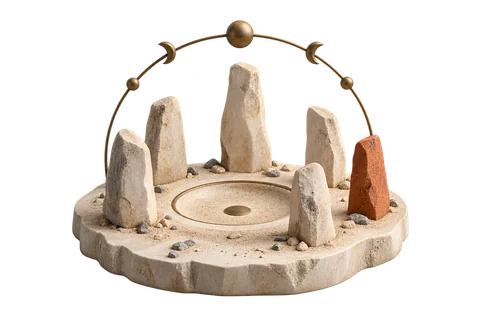
Nabta Playa: stones, sky, and an unproven link to Egypt
Stone monuments in southern Egypt are linked to ritual and sky-watching. A route from them to later Nile Valley traditions has not been traced.
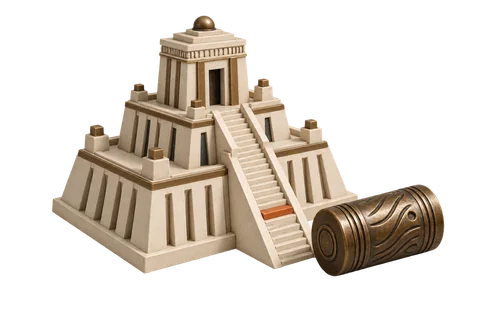
Mesopotamian gods: why place and date matter
Similar images appear in different ancient traditions. To test a link, first find where, when, and in which source each one appears.
Zoroaster: why one story has several dates
Traditions about the founder, the writing of sacred texts, and surviving copies belong to different times. They cannot be reduced to one birth year.
Persians and Jews: when do similar ideas show influence?
The two peoples lived near each other and had contact. A claim that a specific religious idea passed between them still needs texts, dates, and alternative explanations.
The Pentateuch: how texts took shape in an age of empires
The Pentateuch was assembled and passed on in a changing historical world. Scholars disagree about the role imperial settings played in that history.
Early Buddhism: what questions were other schools asking?
Ancient Indian thinkers debated suffering, actions, and liberation. That setting helps us understand the Buddha’s teaching without blending it with later accounts of his life.
Sefer Yetzirah: why do the manuscripts differ?
This short book survives in several versions. Compare the manuscripts before speaking of one fixed “original” text.
The Bahir: why one translation is not the whole story
A translation helps you begin, but it depends on a Hebrew edition and a history of manuscripts. See what text lies behind the familiar wording.
The Zohar: one book or a collection of texts?
The Zohar reached us as a layered written tradition. Translation opens its meaning; manuscripts reveal the history of its parts.
Hekhalot: how to compare stories of ascent to heaven
Related manuscripts tell stories of heavenly ascent in different ways. Comparison reveals what they share without turning them into one book.
Isaac Luria: how ideas changed within a community
Mystical ideas lived in people and rituals as well as texts. The community’s history helps explain the development of Lurianic Kabbalah.
Sabbatai Sevi: how to study a messianic movement
Followers’ belief is part of the movement’s history, not proof of its prophecies. Dated evidence helps trace how it grew and changed.
Jewish mysticism: why do scholars tell different histories?
Different studies start with different texts and periods. Compare their sources before accepting a single map of the past.
Alchemy over the centuries: what changed with the recipes?
Alchemy brought together work with materials, written traditions, and spiritual readings. To link them, we need the date and setting of each source.
Byzantine alchemy: how recipes were kept and changed
Collections and commentaries did more than copy older knowledge. They show how Byzantine readers organized and understood alchemical texts.
Spiritual alchemy: when did new readings appear?
Later spiritual interpretations deserve study in their own right. They cannot be assigned to ancient recipes and experiments without evidence.
Modern alchemy: why did old ideas return?
Interest in alchemy did not end with ancient craftspeople. Modern sources tell a separate story of its revival in occult movements.
Newton’s alchemy: what did he write, and what did he do?
Newton’s notebooks mix ideas with procedures for working with materials. A study separates a recorded recipe from an experiment we can confirm.

Watergate: what does one recorded conversation tell us?
A familiar event name leads to specific archival tapes. Date, participants, and recording number help test a precise claim.
MKULTRA: what do the hearing and official reply tell us?
A government hearing and an agency response answer different questions. Compare them and note which records have not survived.
COINTELPRO: what do the program’s records show?
Archives and a congressional inquiry document the program. Each specific episode still needs its own supporting record.

Iran–Contra: which records reconstruct the case?
An archival finding aid leads through the investigation’s records. Dates and the purpose of each document help build a checkable sequence.
Roswell: what did the official archives contain?
Agencies searched their records and later issued reports. Compare their conclusions without treating a missing document as proof of any theory.
The Protocols: how an antisemitic forgery was exposed
Documents trace the creation and spread of an antisemitic forgery. Comparing texts reveals the evidence that exposed it.
The CIA and the media: what do documents confirm?
One familiar label is often used for different actions. Official inquiries and agency rules let us check each claim separately.
Jebel Irhoud: what do the fossils say about early humans?
Fossils help us study human origins, but one set of remains does not describe a whole population. A wider account needs other evidence.
Human origins: why does the model include several groups?
A genetic model describes connected ancestral groups with gene flow between them. It is a testable proposal, not a story about one isolated population.
Human genomes: what do we share and where do we differ?
Most human DNA is shared. A research institute’s introduction helps explain differences without turning genetic comparison into a label for a person.
Gilgamesh: what does one tablet say about the flood?
Before comparing flood stories, look at an identified museum tablet. Its date and words set the bounds of the comparison.
The Book of the Dead: what is in Ani’s papyrus?
One surviving manuscript joins funerary texts and images. It helps us study ancient beliefs without treating every copy as the same book.
Dao De Jing: which text should you start with?
A digital edition opens the Chinese text. Compare it with a translation to see how each word choice can shift a reader’s understanding.
Zhuangzi: how does a story become a philosophical question?
Read the whole story, then compare a translation. It helps separate the written text, its possible meaning, and later interpretations.
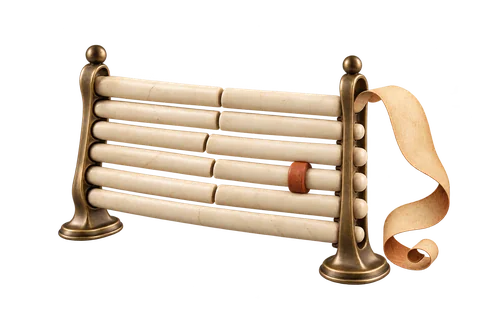
Yijing: where does the text end and commentary begin?
The Book of Changes has layers from different periods. Keep the early text apart from later commentaries and uses.
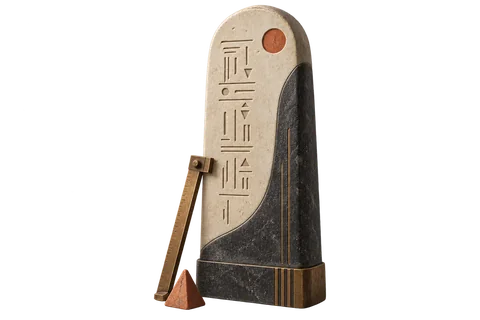
Hammurabi’s laws: what can a stone monument tell us?
The inscription presents rules and an image of royal authority. To learn how real cases were decided, we also need records of legal practice.
No source guides match
Try a different word or clear the filters to see every guide.